Showing posts with label Joe Quesada. Show all posts

10.7.16

The Physicist Has No Purple Pants: Marvel's Hulk-Sized Problems (2 of 2)

(Updated thanks to an eagle-eyed Facebook friend. Thanks, GG!)

When last we left our intrepid blogger, I was constructing a narrative by which I proved that there's a great, big target on the Hulk's green butt, put there by Marvel's powers-that-be and set to have the bull's-eye hit on Wednesday, July 13th, only 3 short days from now, in the pages of Marvel's Civil War II #3. Now, get ready to go beyond the actual event, into what the Hulk's death means for the world of Marvel Comics and its creators, for you the fans, and for the entire doomed comics industry.

(Whoops. Did I just say "doomed"? Heh-heh.)

While I've been taking the time to write these new chapters, I hope you've familiarized yourself with Totally Awesome Hulk #7-8, both now on sale, the latter of them since I published part one. As writer Greg Pak stated himself, the books mark his return to writing Bruce Banner. What he didn't say--but which is patently obvious from reading the eighth issue in particular--is that these stories are intended as a final look back at our favorite physicist, since his next appearance in Civil War II will end with an arrow through his [insert whatever part of Banner's anatomy you want].


4.7.16

O Death, Where Is Thy...Smash??!? (1 of 2)

(EDITED 7/8 thanks to Cth at The Incredible Hulk Message Board!)

It's been about a year since my last post on Marvel's Green Goliath. Those of you who have followed me for any considerable time know the Hulk is my favorite comics character. Hence, I'm a bit territorial when it comes to big events surrounding Big Green. And when I'm displeased, I'm known to write pieces like those dissecting the runs of Jason Aaron and Mark Waid.

Up to now, I've been staying eerily quiet about Totally Awesome Hulk. That ends today.


I've got much more to get into than Totally Awesome Hulk by itself, so I'll try to be brief. For Greg Pak--one of my very favorite Hulk writers, his name spoken in the same breath as Len Wein, Bill Mantlo & Peter David--to have a comeback would ordinarily be a cause for celebration. At the same time, there was apprehension, for what writer successfully returns to the book on which he made his mark? Even Peter David couldn't make lightning strike twice, leaving not even a year into his second tenure. It was true that this time, Pak was making his own creation, Amadeus Cho, into a brand new Hulk, in a move that I previously stated echoed Bill Mantlo's original plans before he handed the book to John Byrne. Some at the time called it a Gary Stu situation (look it up) beyond all others. Me, I went along for the ride, as Pak had earned much goodwill in his prior five-year run.

25.8.11

DCnU: The New Continuity - Crisis Of Infinite Events (4)

(DCnU Continuity Series:  Part 1 | Part 2 | Part 3 | Part 4 | Part 5)


This article is the fourth in a series analyzing a concept that has been one of the major underpinnings of comic books since Stan and Jack decided to have each series in their new line of Marvel Comics build on the others before. Here, I'm going to transition from the continuity craziness of the nineties...to the continuity craziness of the 2000s. And you'll see special attention paid to crossover events, a throughline from the last few entries. We're running a bit long, so within the next few days I promise to bring it all home with how DC Comics' "New 52" figures into the mix.

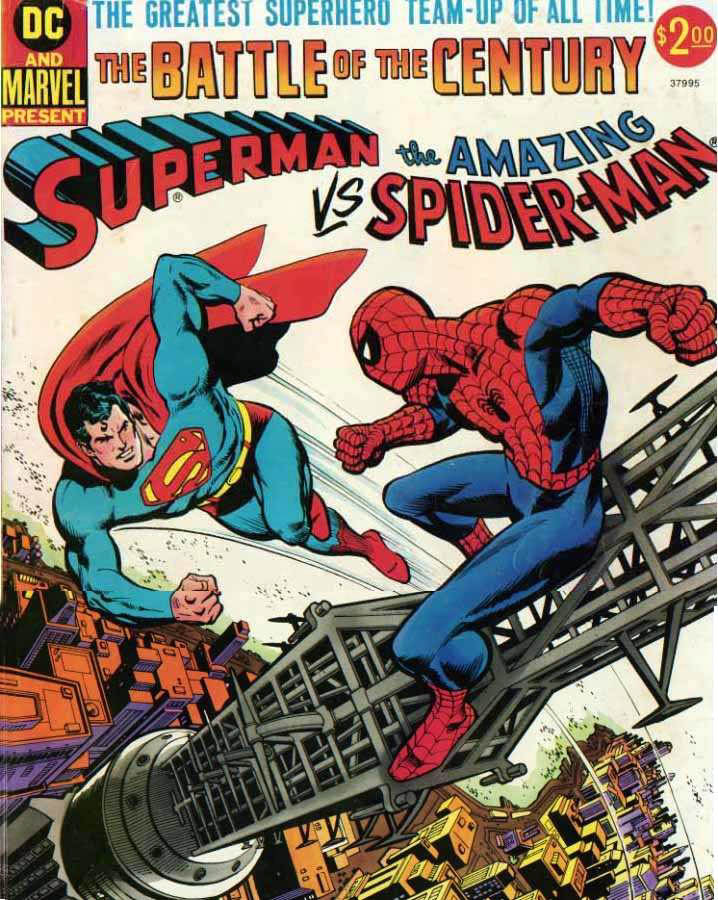
Before the sixties, comics stories only rarely referenced each other, but with a new breed of comic came a new breed of comics fan interested in seeing how disparate elements in the universe connected. While Marvel developed their own, at first tightly-knit continuity, DC experimented with alternate realities across which their adventures took place. In the seventies, when comics' direct market took shape, the shared universe concepts especially took root as did a more fan-centric atmosphere. This was the age of the Omniverse fanzine and the Superman Vs. The Amazing Spider-Man tabloid-size crossover. The crossovers between companies stopped in the eighties, with companies finding value in having their own characters all team-up in line-wide events that haven't stopped to this day. In Crisis on Infinite Earths DC sought to do away with their Multiverse concept in favor of a streamlined, more "realistic" lineup, but only created more problems that would plague them for decades.